Event Production
What Does Event Production Include? A Practical Guide
Event production is the technical and physical build behind an event. This guide explains what it covers, how it differs from event management, and how it is planned.
By NuKoncept EventsPublished 8 min read
When people talk about an event looking and sounding right, they are usually talking about production. The stage that suits the room, the lighting that shapes the mood, the sound that reaches the back row and the screens that everyone can read are all production. They are also the parts of an event that are hardest to fix on the day.
Event management, event production and technical production: what is the difference?
These terms overlap, and companies use them differently. A useful working distinction is the following.
- Event management covers the overall plan: the objective, the budget, the schedule, the venue, vendors, guests and the programme. It is about decisions and coordination.
- Event production covers delivering the physical and technical side of the event: what is built, what is installed and what is operated.
- Technical production is the part of production focused on systems: sound, lighting, video and power, and the people who run them.
Some companies do only one of these. Others, including NuKoncept Events, combine event management with production in one team. The advantage of combining them is that production decisions are made while the event is being planned, not after. See event production for how NuKoncept describes it.
What does event production include?
Event production covers the technical and physical delivery of an event, including staging, set elements, audio, lighting, visual systems, installation and on-site coordination. The exact scope depends on the event. A small seminar may need little more than a microphone and a screen. A large launch or a multi-day conference may involve every item below.
Stage
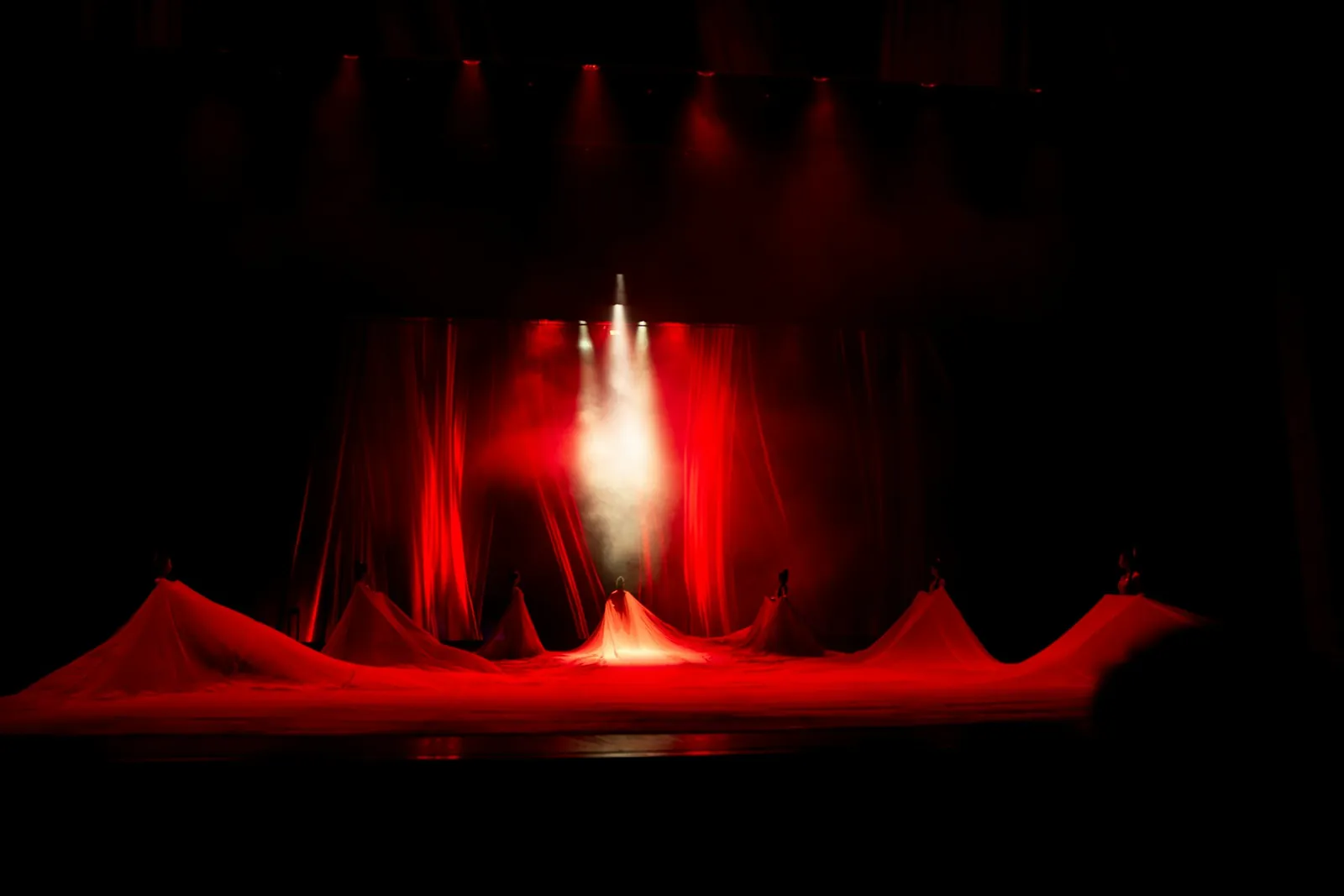
The stage is the focal point of many events. Production decides its size, height, shape, access steps, surface and structure, and how it relates to the seating and the screens. A stage that is too small restricts the programme, and a stage that is too high or too deep can disconnect the audience.
Set and décor
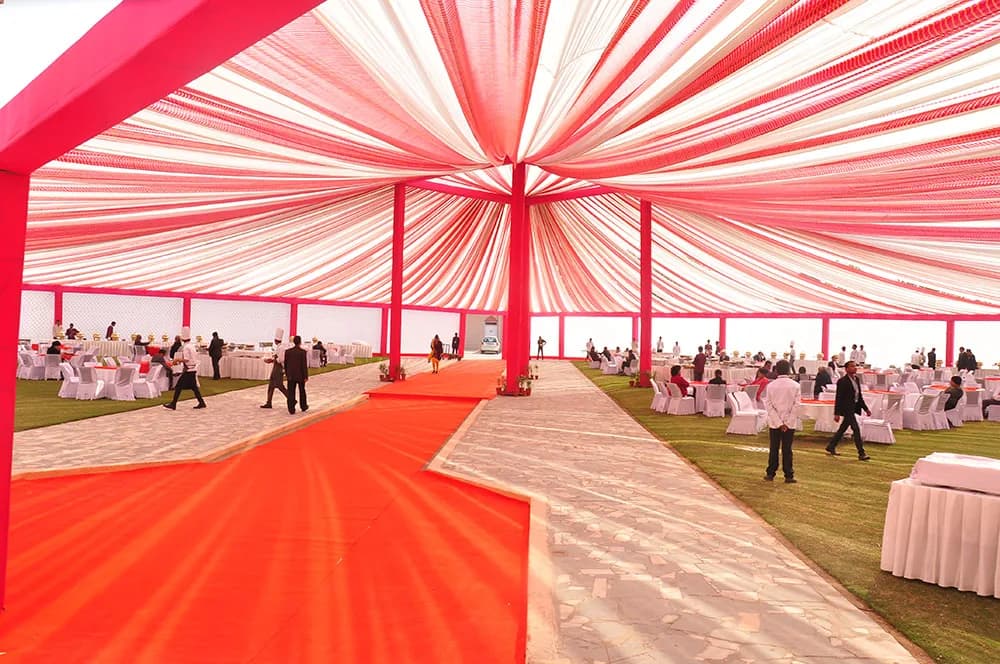
The set is what surrounds the stage or occupies the space: backdrops, entrances, branded structures, themed elements and décor. Good set design supports the purpose of the event and the brand. It also needs to be buildable, safe and removable within the time available.
Fabrication
Fabrication is making physical elements to a design: custom structures, counters, backdrops, display units and stalls. It needs a drawing or visual, materials, a build period and a trial assembly for complex items. NuKoncept lists fabrication among its in-house capabilities; see also exhibition stall fabrication.
Audio
Audio covers microphones, speakers, mixing and monitoring: everything required to make sure the audience can hear clearly and performers can hear what they need to. It depends on the room, the audience size and what is being delivered, whether speech, music or live performance.
Lighting
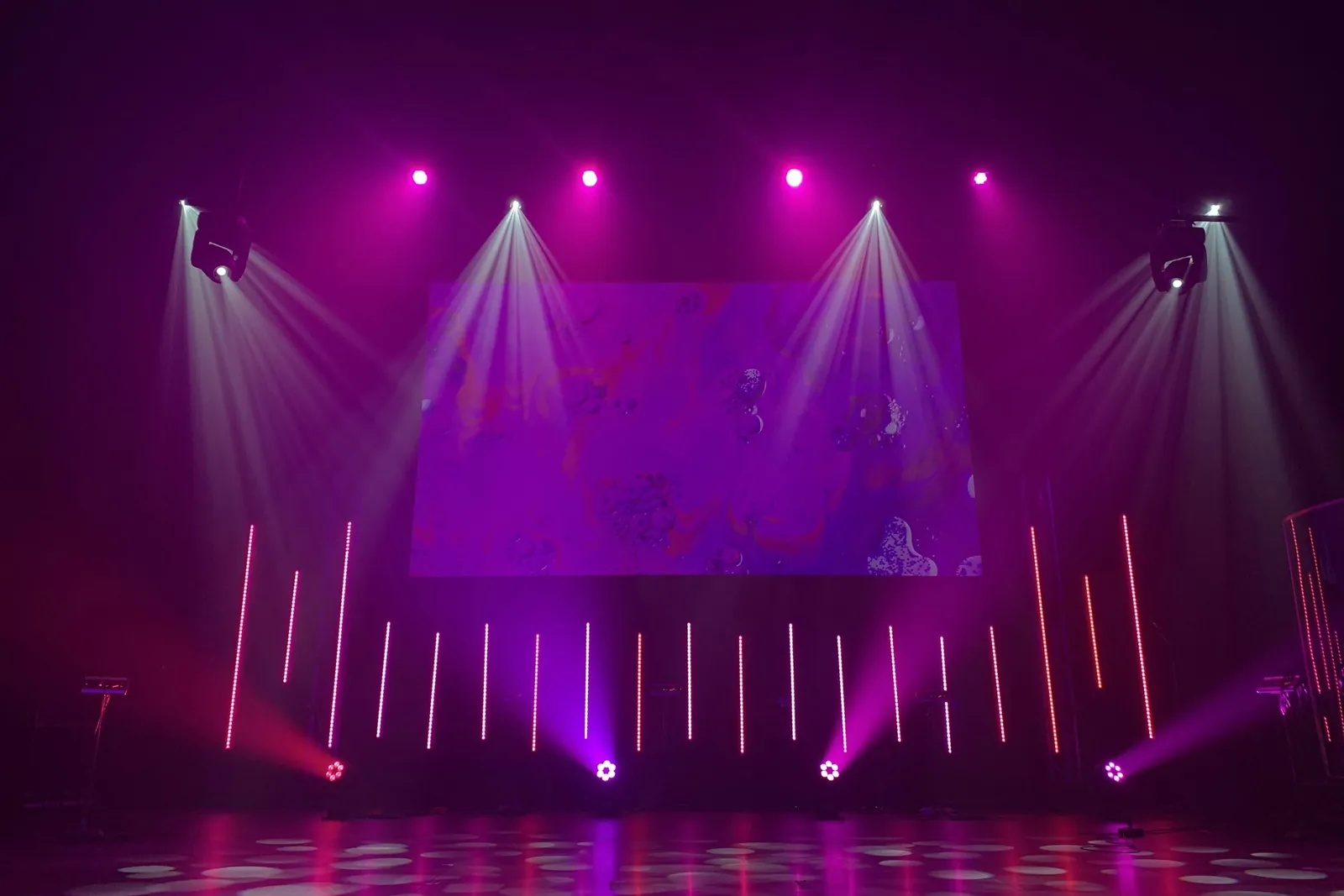
Lighting has several jobs: making people visible, setting the mood, highlighting areas, supporting branding and working with cameras if the event is recorded or streamed.
Visual systems
This covers screens, projection and LED displays, and the playback and switching systems behind them. It includes planning size, position, content formats and the way presentations are received and run.
Power and cabling
Everything above needs power. Production plans the load, the distribution, the cable routes and the backup, and coordinates with the venue. Power is easy to ignore until something trips, so it is worth planning early.
Backstage coordination
The audience sees the stage. The team works backstage. Production plans the backstage area, communication between operators and the flow of speakers, performers and props on and off the stage.
Rehearsals and show calling
A technical rehearsal tests the cues and the equipment together. At larger or more complex events, a show caller calls the cues to operators using a communication system, so lighting, sound, video and stage movements happen at the right moment.
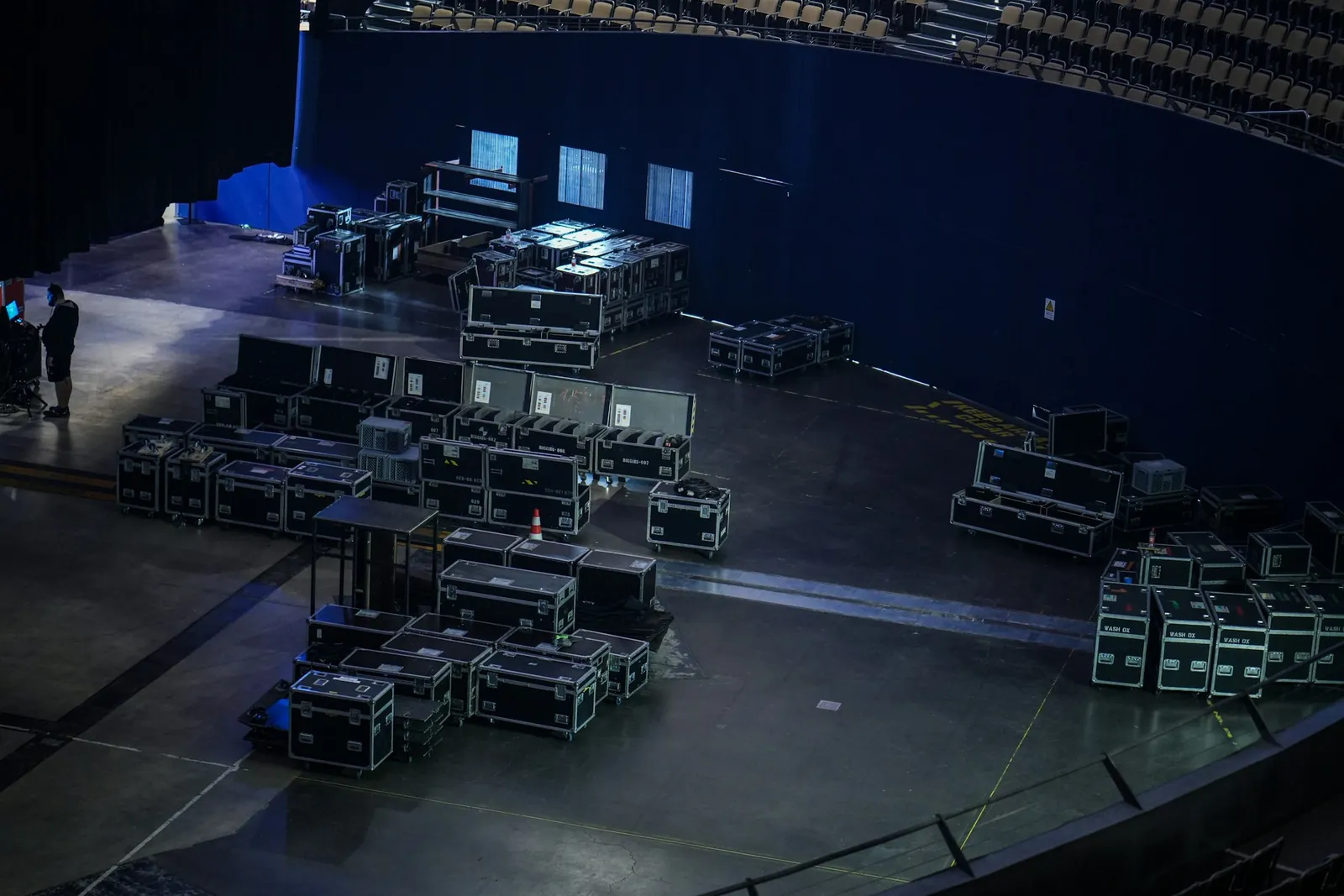
Installation and dismantling
Production does not end when the event does. Everything installed has to be removed within the venue’s time and rules, and the venue left as it was found.
How production is planned
Production planning follows a sequence. The time each step takes depends on the scale of the event and how much needs to be built.
- Brief. Objective, audience, programme, venue and constraints.
- Design. Stage, set, lighting and visual concepts, with drawings or visuals for approval.
- Technical plan. Equipment needs, power, cabling, positions, crew and schedules.
- Fabrication and preparation. Building and testing items, and preparing equipment.
- Installation. Loading in, setting up and testing at the venue.
- Rehearsal. Running cues and checking every system.
- Operation. Running the show and managing any problems.
- Dismantling. Removing everything and handing the venue back.
Who does what in a production team
Production is delivered by a group of people with different jobs. Titles vary between companies, but the functions are fairly consistent.
- A production lead or manager who owns the plan, the schedule and the budget for the technical side, and is the main contact for the client and the venue.
- Designers who develop the stage, set and lighting concepts and produce the visuals and drawings.
- A fabrication team that builds structures and fittings to the approved design.
- Sound, lighting and video operators who set up and run the systems during rehearsal and the event.
- A stage manager or show caller who coordinates cues and the movement of people and items on and off the stage.
- Crew who load in, install, assist during the event and dismantle.
When you ask who will be on site, you are asking about these roles. A small event may have one person covering several of them. A large event needs more people, and clearer communication between them.
How production changes with the type of event
- Conferences need clear speech, readable screens, reliable presentation handling and quick changeovers between sessions.
- Weddings need décor and staging that suit several functions, sound for ceremonies and performances, and lighting that works at different times of day.
- Product launches need a stage and a set built around a reveal, with lighting, sound and screens cued together.
- Exhibitions need stalls and structures that suit the organiser’s rules, with lighting and display planned for the hall.
- Live performances need sound, lighting and stage plans driven by the artists’ technical requirements.
Safety and compliance
Production adds structures, electrics and equipment to a space where people gather, so safety is part of the plan and not an afterthought. The details depend on the venue and the event, so ask who is responsible for each.
- Structural stability of stages, rigs, backdrops and hanging items
- Electrical safety, cable routing and protection of cables where people walk
- Clear exits and walkways that are not blocked by equipment or décor
- Fire safety rules for materials and décor, as set by the venue and the organiser
- Crowd movement around stages, entrances and catering points
- Safe working practices for the crew during installation and dismantling
What affects the cost of production
There is no standard price for production, and this website does not publish prices. The things that move the cost are the same for most events.
- The size and complexity of the stage, set and fabrication
- The amount of sound, lighting and screen equipment, and the crew to operate it
- How long the event runs, and how many days of setup, rehearsal and dismantling are needed
- Venue constraints, such as access, working hours, power and ceiling limits
- Travel, transport and accommodation for crew and equipment
- How many changes are made after the design is agreed
Ask for the production proposal to be itemised, so you can see where the money goes. The event budget planning guide explains how to compare quotes.
Questions to ask a production partner
- What exactly is included in the production scope, and what is not?
- Who designs, who builds and who operates, and is any of it subcontracted?
- How are power requirements assessed and who arranges backup?
- What is the schedule for installation, rehearsal and dismantling?
- How are changes handled once design has been approved?
- Who is on site during the event, and who do I contact if something goes wrong?
- How do you work with the venue’s own rules and technical staff?
Ask for the answers in writing as part of the proposal. The guide to choosing an event management company in Jaipur lists what a proposal should include.
Common production mistakes
- Arranging production last, when the venue and date are fixed and options are limited
- Not checking the venue’s power, ceiling and access limits before designing
- Skipping the technical rehearsal
- Changing the design after fabrication has started
- Not allowing enough time for installation or dismantling
- Leaving sound, lighting and screens as separate decisions rather than planning them together
Where NuKoncept fits
NuKoncept Events combines event management with event production. Stage, set, fabrication, lighting, sound and AV are planned together and delivered by an in-house team, alongside planning and on-site coordination. NuKoncept does not publish an equipment list on this website; requirements are specified for each event.
If you want to know more about the technical side, read sound, lighting and AV for events, and see the sound, light and AV service page. For launches, see how to plan a product launch event. To discuss a production brief, contact NuKoncept Events.