Weddings
Planning a Wedding Event in Jaipur: A Practical Guide
How to plan a wedding in Jaipur, from deciding what the celebration needs and choosing a venue to guest movement, décor, production, vendor coordination and the days themselves.
By NuKoncept EventsPublished 7 min read
A wedding is rarely a single event. It is a series of functions over several days, each with its own guests, setting, timing and mood, held by families who also have their own expectations and customs. Planning one well is mostly a matter of coordination: keeping many decisions, vendors and people moving to the same plan.
Decide what the celebration needs to be
Before you look at venues or vendors, answer a few questions with the families involved.
- Which functions will there be, and over how many days?
- Roughly how many guests will attend each one?
- Which parts matter most to the families: the ceremony, the hospitality, the entertainment, the setting?
- How many guests are coming from other cities, and will they need accommodation?
- What is the budget range, and who approves spending?
These decisions shape everything else. It is easier to plan around a clear priority than to make every part equal. If decisions will involve several family members, agree early who has the final word on each area. It saves a lot of time later.
Choosing a venue in Jaipur
A venue sets the capacity, the look, the schedule and much of the cost. Visit before you decide, ideally at the time of day the function will take place, and ask practical questions as well as looking at the setting.
- Capacity. Ask how many guests the space holds in the layout you want, such as banquet seating, not only the maximum standing number.
- Access and parking. Check how guests, elderly relatives and vendors will reach the venue and where vehicles will wait.
- Power and backup. Ask what power supply is available and what the backup arrangement is.
- Rules. Ask about timings, noise limits, music cut-off, décor restrictions, outside vendors and any fees for these.
- Indoor and outdoor areas. If part of the event is outdoors, ask what the plan is for heat, rain or wind.
- Facilities. Check changing rooms, restrooms, kitchen and service areas, storage and the space for vendors to set up.
- Stay. Check whether rooms are available for the families and guests, or whether accommodation will need to be arranged elsewhere.
No venues are named or recommended here. The right venue depends on your functions, guest numbers, budget and preferences, and it is worth seeing several.
Season and weather in Jaipur
Weather affects comfort, setup and timing. Jaipur summers are very hot, the monsoon months bring rain, and the cooler months are more comfortable for outdoor functions. Many families also choose dates according to auspicious timings, so popular dates can be in demand and venues and vendors fill up early.
- For hot periods, plan shade, cooling and enough drinking water, and consider moving outdoor functions to cooler times of day
- For rain-prone periods, plan a covered alternative, and check how the décor and electricals will be protected
- For any outdoor function, ask what happens if the weather changes at short notice and who decides
Guest experience and movement
Guests judge a wedding by how comfortable it is as much as how it looks. Think through the journey for each function.
- How guests arrive, where they are met and where they wait
- Clear signage from the entrance to each space
- Seating for elderly guests and enough shaded or cooled areas
- Transport between hotel and venue, and between functions at different locations
- Where guests go if they need help, and who they ask
- How the flow works between ceremony, photographs, food and entertainment
Décor and staging
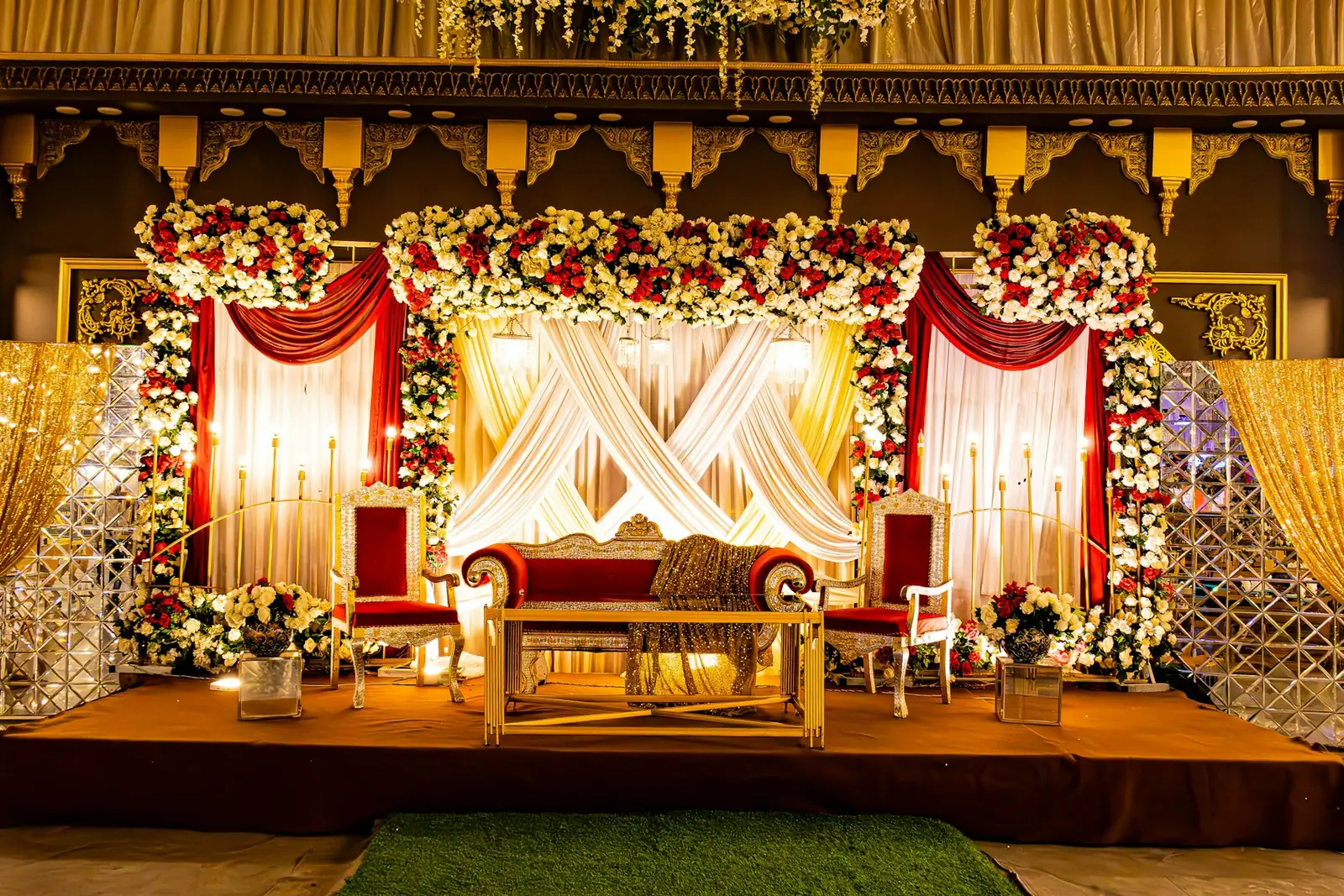
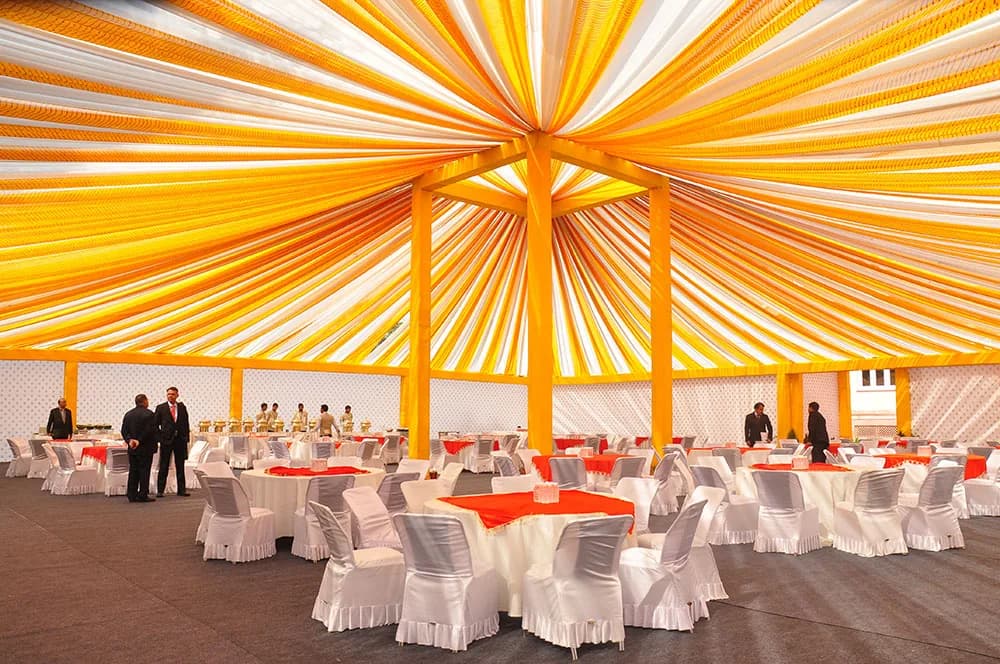
Décor and staging are visible and emotional, and they also take time to design, source and build. A stage, an entrance, a set or a draped ceiling are constructed objects, not just decorations. Decide on the concept early, and confirm what the venue allows before finalising anything.
- Agree a concept and a colour direction, and get a visual or drawing before anything is built
- Plan the entrance, the stage or ceremony area and the main photograph backdrops
- Check the ceiling height, loads and power available for any structure or lighting
- Confirm installation and dismantling windows with the venue
- Leave margin in the schedule, because large builds often need setup time the night before
Catering coordination
Catering shapes how guests spend their time. Ask the caterer and the venue to agree on layout and timing.
- Counter and service-point positions that do not create queues or block movement
- Menus that cover dietary needs and preferences across the guest list
- Timing of meals relative to the ceremony and entertainment
- Who is responsible for crockery, service staff and cleaning
- Hygiene arrangements and waste handling
Entertainment and artists
Performances need space, sound and time. Plan the technical side before you finalise the programme.
- Confirm the stage size, sound and lighting each performance needs
- Check whether any artist has technical requirements and share them with the production team
- Agree arrival, soundcheck and performance timings
- Decide who manages the artists on the day
NuKoncept lists artist management among its services, covering coordination of artists for events and weddings.
Sound, lighting and production
Sound and lighting make ceremonies audible, performances watchable and spaces feel right. They also need power, cabling and operators, and they must be planned with the stage design. See sound, lighting and AV for events and the event production guide for what to plan. Check local rules on sound levels and timings with the venue, because they can affect the programme.
Build a timeline for each function
Because a wedding has several functions, each needs its own timeline as well as one for the whole event. For each function, write down:
- The start time, and the times of key moments such as arrival, ceremony, meal and performances
- When vendors arrive, set up and leave
- The people responsible for each segment
- A buffer for delays, so a late start does not push everything back
Where an auspicious time governs the schedule, anchor the other timings to it. For how far in advance to begin, see the event planning timeline.
Coordinate vendors against one plan
Most wedding problems come from vendors working to different assumptions. Give everyone the same schedule and floor plan.
- Share the final timeline and layout with every vendor
- Agree access times and entry points, and arrange passes where the venue requires them
- Decide the order of setup, so heavier builds go first
- Share one contact list with names and mobile numbers
- Ask each vendor to confirm in writing what they will deliver and when
Managing the days themselves
During the wedding, the family should be guests. Appoint someone, a planner or a coordinator, to hold the schedule and make decisions on site.
- A named lead for each function, with a phone and a copy of the run sheet
- A short briefing for the team before each function begins
- A plan for the common risks: late arrivals, weather, power failure, a missing vendor
- A person who checks the space before guests arrive
Use the event day management checklist as a starting point.
Common mistakes in wedding planning
- Choosing the venue before knowing the functions and guest numbers
- Leaving décor and staging design to the last few weeks
- Not asking about venue rules on music, timings and outside vendors
- Underestimating guest movement, parking and accommodation
- No single plan shared by all vendors
- Having no one in charge on the day who is not a family member
- Ignoring budget tracking until late. See the guide to planning an event budget.
Working with a planner
If you work with a wedding planner or an event company, ask for a written scope, a schedule and an itemised proposal. How to choose an event management company in Jaipur explains what to look for. For budgeting, see planning an event budget.
NuKoncept Events plans and produces weddings in Jaipur and across Rajasthan, covering planning, décor, staging, production and coordination. The wedding events page describes the scope. To talk through your plans, contact the team with your dates, the functions and a rough guest count.